
Let’s be honest for a moment. If you walk into a gym—whether it’s a high-end commercial facility, a gritty powerlifting club, or a functional fitness box—and you don't see a squat rack, is it really a gym?
However, the market is currently flooded. There are thousands of options.When your clients ask you, "What should I look for in a squat rack?" you need to have a detailed, expert answer that goes beyond just the price tag. You need to understand the nuances of steel gauge, hole spacing, safety systems, and modularity.
The Foundation: Steel Quality and Structural Integrity
11-Gauge Steel: This is the gold standard for commercial and high-end light commercial racks. It is approximately 3mm thick. When you are supplying gyms that will see hundreds of athletes, or selling to serious lifters who move 500+ lbs, 11-gauge is non-negotiable. It provides the structural rigidity necessary to prevent swaying and twisting under load.
12-Gauge to 14-Gauge: You will find this in budget, entry-level home gym equipment. While it serves a purpose for casual lifting, it lacks the longevity and stability required for a commercial environment.
For a distributor looking to build a reputation for quality, stick to 11-gauge steel. It tells your customers that you prioritize their safety.
Upright Dimensions
The size of the tubing determines the rack's physical footprint and its compatibility with attachments.
- 2x2 Inch: Common in older or budget models. It’s functional, but attachment options are becoming limited as the industry evolves.
- 2x3 Inch: A classic commercial size. It is incredibly strong, especially front-to-back.
- 3x3 Inch: This is the modern heavyweight champion. A 3x3 inch upright (75mm x 75mm) offers four-way hole compatibility and immense surface area for stability. If you are stocking inventory for the future, 3x3 is the direction the entire industry is moving. It looks impressive, feels indestructible, and offers the most modularity.
Weight Capacity
A true commercial rack should be rated for at least 1,000 lbs (approx. 450 kg). While very few humans will ever squat 1,000 lbs, this rating is a proxy for the rack's ability to withstand dynamic impact forces—like a loaded barbell being dropped onto the safety bars from two feet up.
Types of Racks: Matching the Equipment to the Facility
Not every gym needs a fully enclosed cage. Understanding the different form factors helps you provide the right solution for your client's specific space and training style.
The Power Rack (Full Cage)
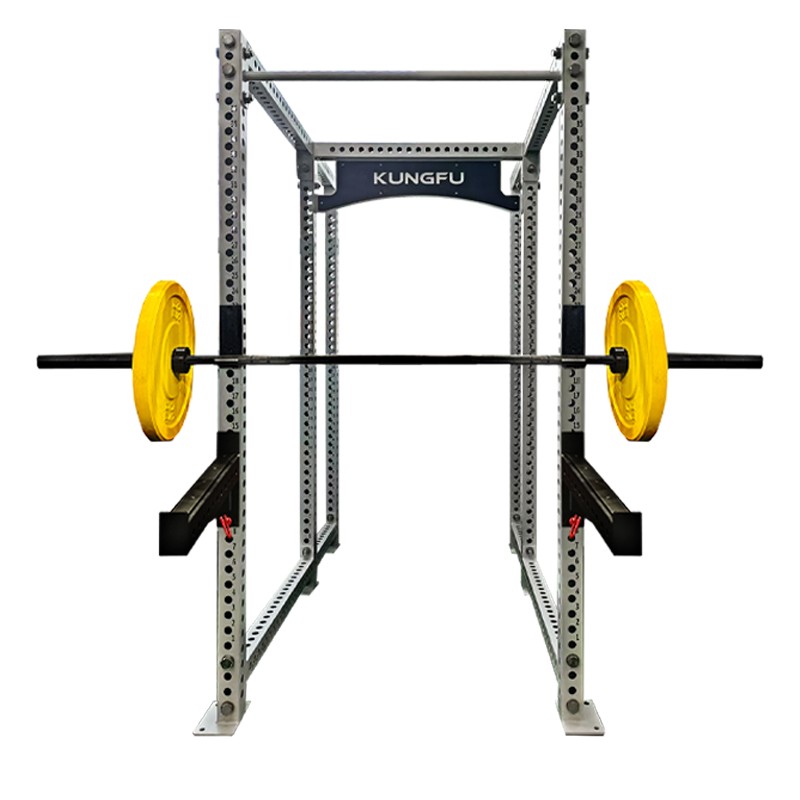
The Power Rack is a four-post or six-post box. The lifter stands inside the uprights.
- Pros: Maximum safety. If a lifter misses a rep, they are contained within the safety pins/straps. It allows for band work and offers excellent storage potential.
The Half Rack
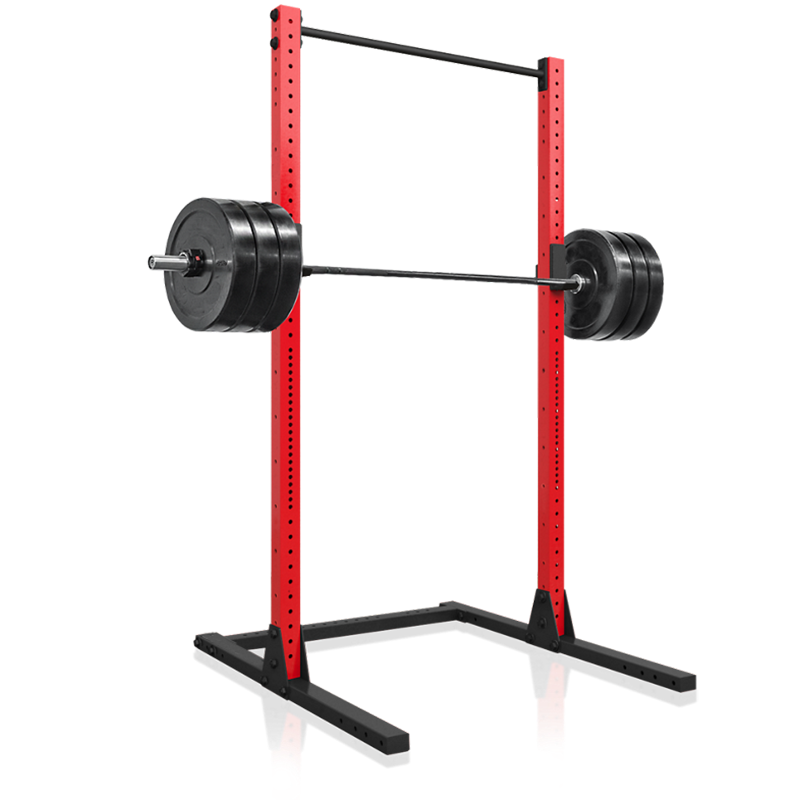
A Half Rack typically has two main uprights for lifting and two shorter back uprights for storage. The lifting happens in front of the rack, not inside it.
- Pros: It has a smaller visual footprint and feels more "open," which is great for dynamic movements like Olympic lifting where a user might bail the bar forward or backward. It is also very space-efficient for flooring layouts.
The Squat Stand
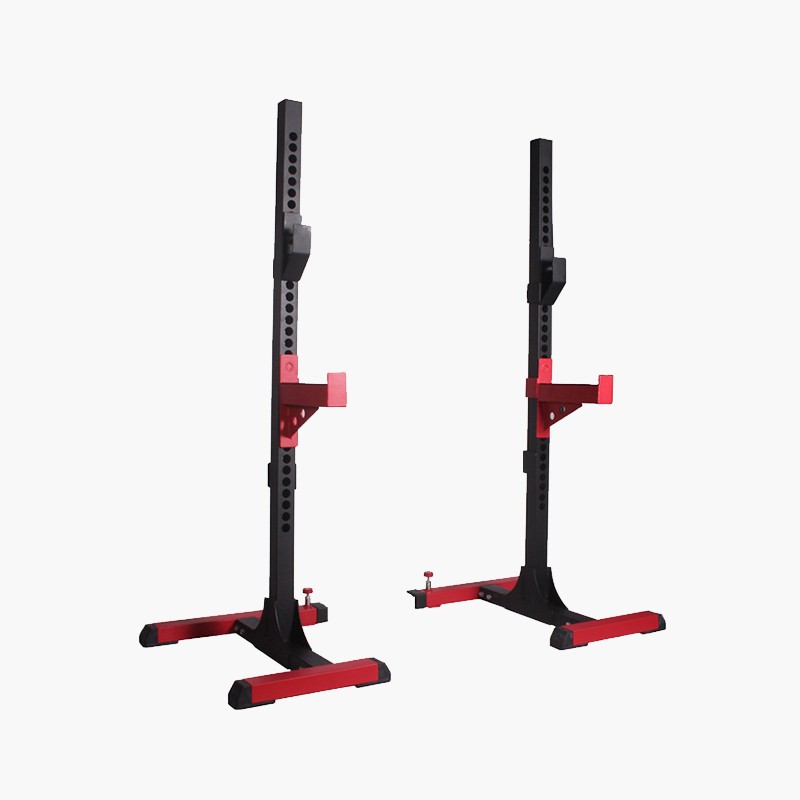
These are usually two uprights connected by a base, with no upper pull-up bar connecting them
- Pros: Extremely portable and cost-effective.
Wall-Mounted Racks (Foldable)
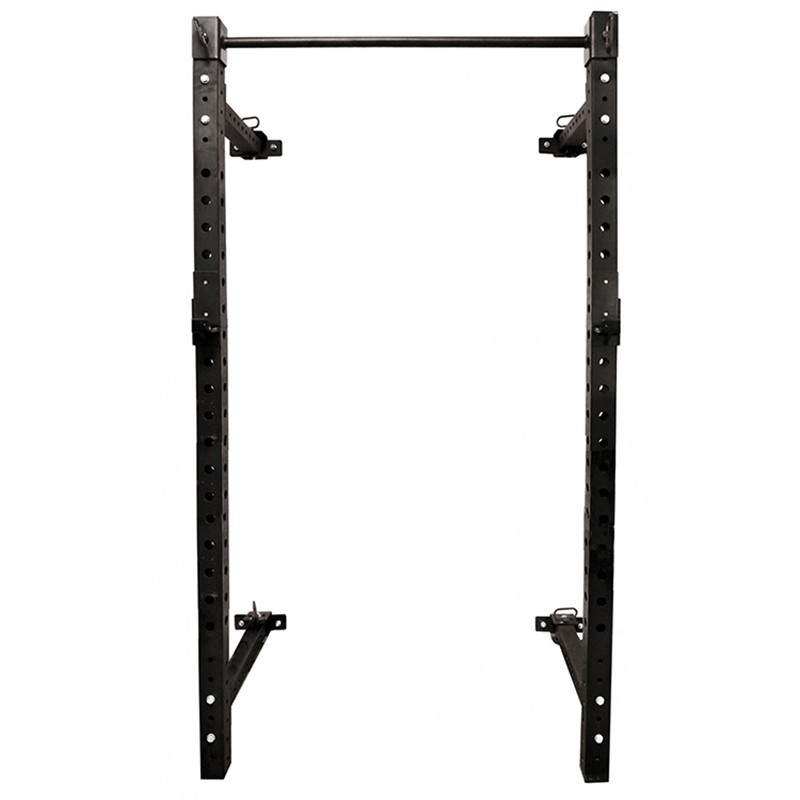
These racks bolt into the wall and can often fold inward when not in use.
Pros: The ultimate space saver. It allows a room to be a garage or yoga studio by day and a weight room by night.
The Ecosystem: Attachments and Modularity
The Pull-Up Bar
Multi-Grip Bars: These offer neutral, wide, and narrow grips, adding variety to back training.
Fat/Skinny Bars: A bar with two different diameters to train grip strength.Cable Systems
Can the rack accept a lat-pulldown attachment or a functional trainer cable trolley? This transforms a footprint of 16 square feet into a full-body machine.
Landmines and Dip Stations
Landmines: A simple pivot joint at the bottom of the rack allows for T-bar rows, landmine presses, and rotational core work.
Dip Horns: An attachment that slides onto the uprights fors tricep dips.