
For gym owners and distributors, the rig represents the single most significant infrastructure investment after the lease itself. It defines the flow of the room, the capacity of classes, and the aesthetic vibe of the brand. But when it comes time to sign the purchase order, one fundamental question stalls almost every project: Should we go with a Wall-Mounted Rig or a Stand-Alone (Freestanding) Rig?
The Anatomy of the Decision: Understanding the Core Differences
Before we dive into the specific use cases, let’s strip these systems down to their mechanical basics. Both systems utilize the same fundamental components—usually 3x3” (75mm x 75mm) 11-gauge steel uprights, J-cups for racking barbells, and crossmembers for structural integrity and pull-ups. The difference lies entirely in how they anchor to the facility and how they utilize space.
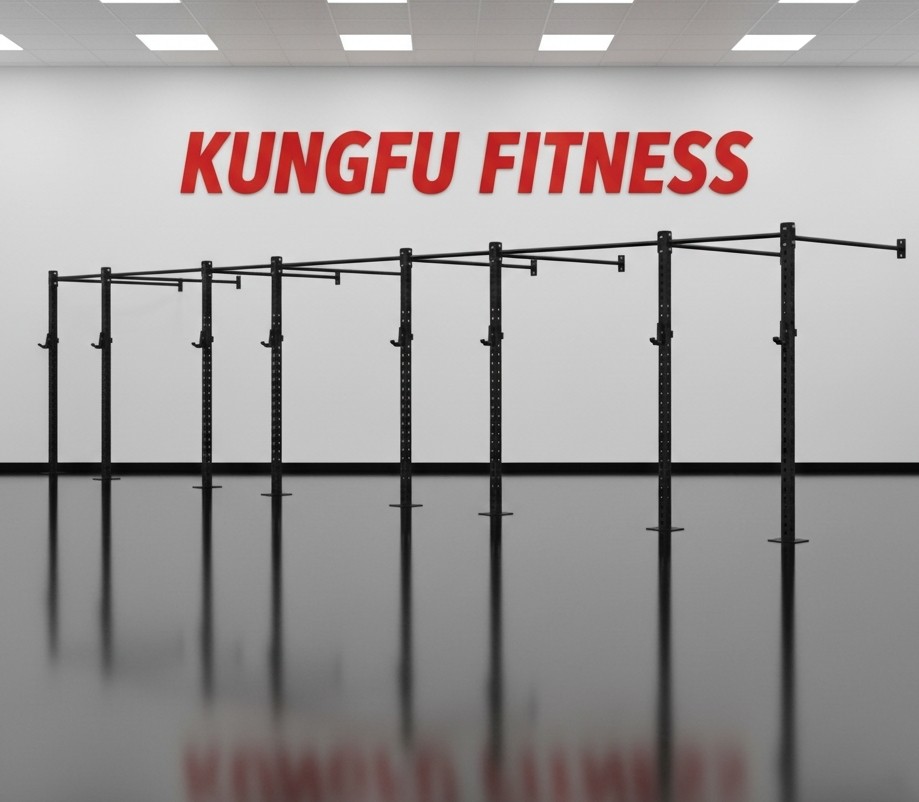
The Wall-Mount Rig
A Wall-Mount rig uses the facility’s existing wall as its primary support structure on one side. It projects outward into the room—typically 4 feet or 6 feet—and anchors to the floor at the front.
The Stand-Alone (Freestanding) Rig
A Stand-Alone rig is a self-supporting island. It anchors only to the floor (usually via four or more uprights per section) and does not touch the walls.
The Wall-Mount Rig – The Efficiency Expert
Maximizing Open Floor Space
The primary argument for the Wall-Mount rig is the "Open Floor Concept." By pushing the training rack to the perimeter, you leave the center of the room wide open. This is critical for:
- Multi-use Facilities: If a gym needs to run a strength class at 6 AM and a yoga or mobility class at 7 AM, a wall-mount rig keeps the center clear for mats.
- Turf Lanes: Many modern gyms want a sled push/sprint lane down the middle. A wall-mount rig allows for a 40-foot turf track that a central rig might obstruct.
- Visual Size: In smaller rooms (under 2,000 sq ft), a large rig can make the space feel claustrophobic. Wall-mounts rig make small rooms feel big.
Cost-Effectiveness
From a procurement standpoint, Wall-Mount rigs are generally less expensive. Why? Because you are buying fewer uprights.
If you build a 24-foot Stand-Alone rig, you need uprights on the front and the back (double the steel). If you build a 24-foot Wall-Mount rig, the back "uprights" are essentially replaced by the wall. You save on steel, shipping weight, and hardware costs. For a gym owner on a tight startup budget, this 20-30% savings can be reallocated to better barbells or flooring.
The Freestanding Rig – The Community Hub
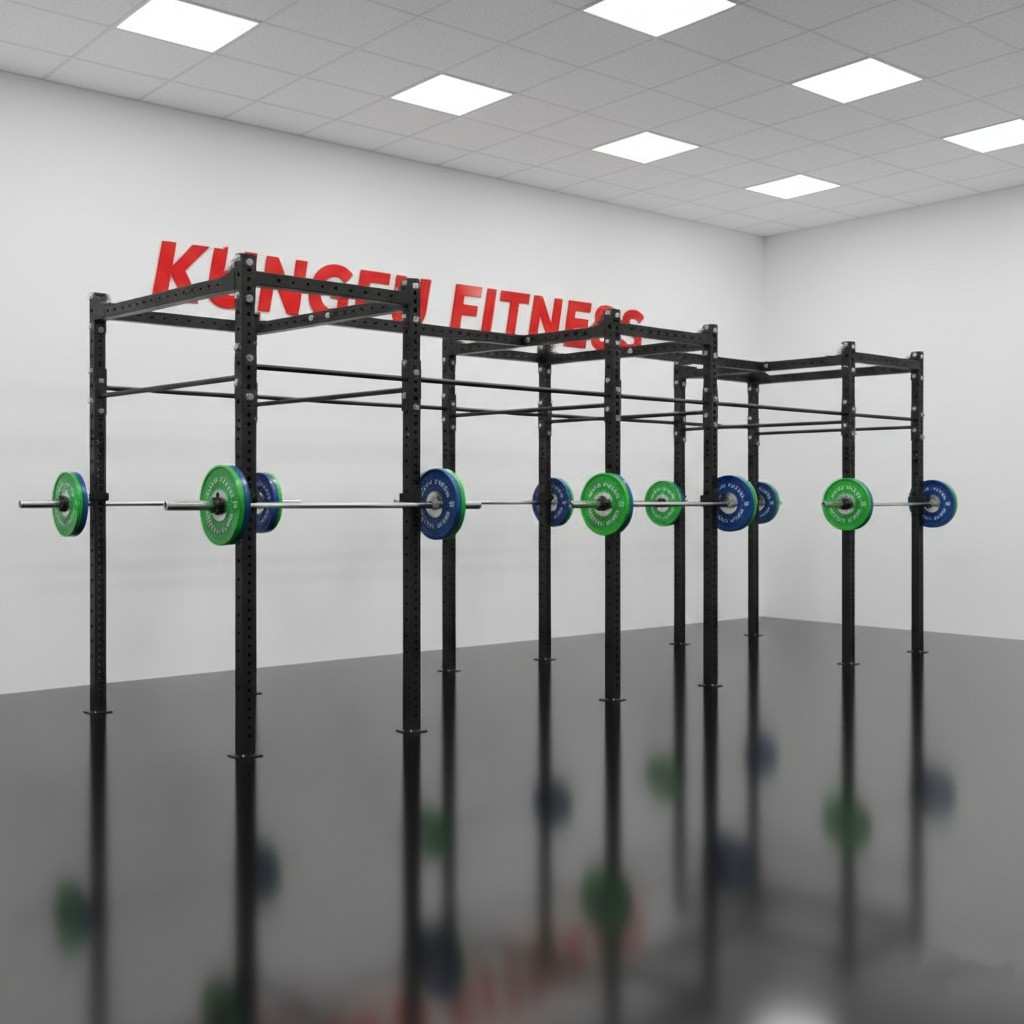
If space allows, the Stand-Alone rig is often the preferred choice for high-volume functional fitness facilities and athletic performance centers. It is not just a rack; it is the skeleton of the gym's programming.
Double the Capacity (The 360-Degree Advantage)
Wall-Mount: You have 6 lifting stations (one every 4 feet).
Freestanding: Because you can access both the front and the back, that same 24-foot length provides 12 lifting stations.
For a gym owner running group classes, this is a game-changer. It means they can run a class of 24 people (partners sharing racks) in the same linear footprint that a wall-mount would only serve 12. This creates higher revenue potential per class hour.
Versatility and "Jungle" Configurations
Stand-Alone rigs allow for flying pull-up ladders, and monkey bar configurations that connect multiple rig lanes together. You can build a "bridge" between two freestanding rigs to create massive overhead capacity.
Furthermore, storage can be integrated inside the rig. You can put shelves for kettlebells and balls between the uprights, keeping the rest of the gym floor tidy.
The downside, of course, is the footprint. A standard freestanding rig is 4 to 6 feet deep, but you need a "working halo" of at least 4 feet on both sides for safety.
So, a 6-foot deep rig actually consumes a 14-foot wide strip of floor space. In a narrow building (e.g., 20 feet wide), a freestanding rig essentially kills the functionality of the room.