
The strength area is the heart and soul of any serious gym. It's the most critical, most utilized, and often the most expensive real estate in the entire facility. For your clients—the gym owners and facility managers—getting this space right is not just a matter of aesthetics; it's a matter of profitability, member retention, and brand identity.
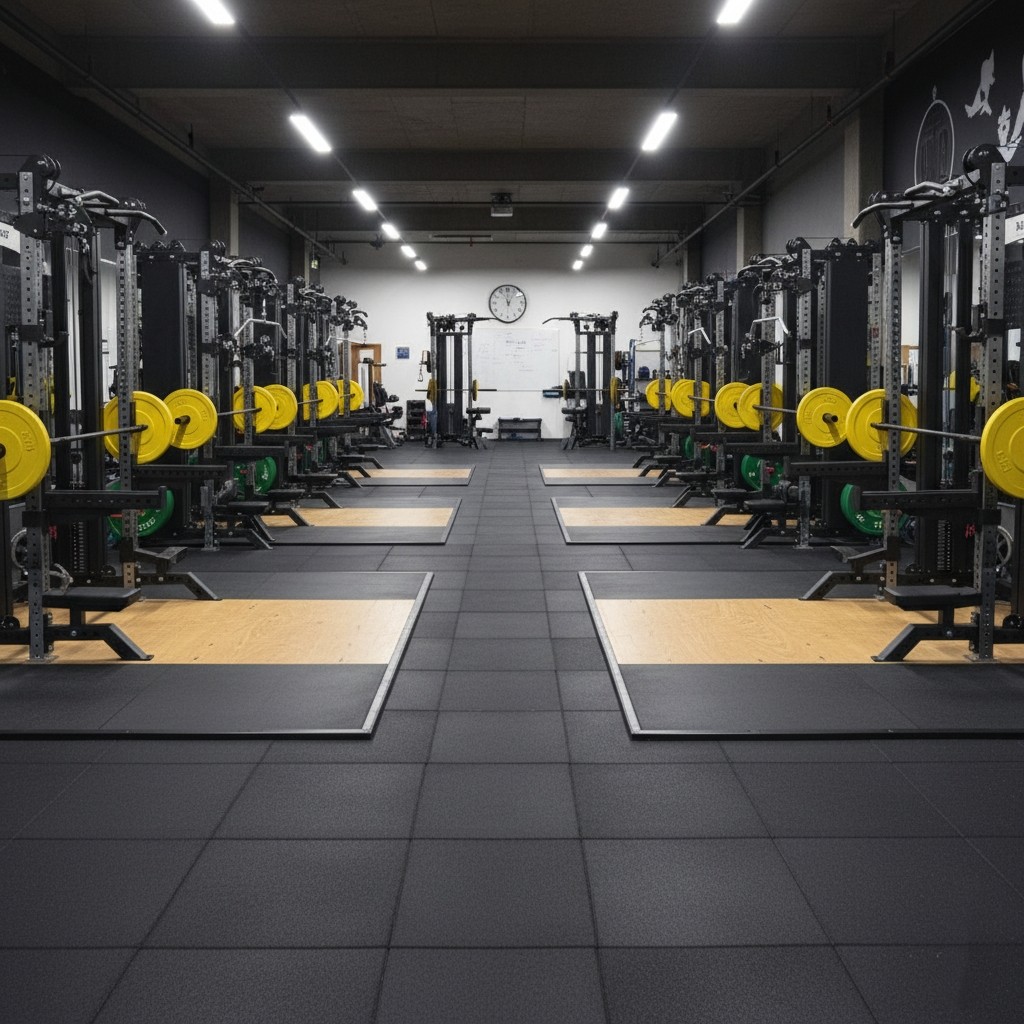
The Core Philosophy: The Squat Rack
The system creates a series of self-contained, multi-functional training stations, or "pods." Each pod contains everything an athlete needs for the majority of their workout.
- Superior Workflow: It eliminates the time members waste searching for equipment. Everything they need for their core lifts and accessory work is within arm's reach.
- Enhanced Safety: It dramatically reduces trip hazards from scattered plates and barbells, creating clear, defined, and safe training zones.
- Improved Coaching and Member Experience: In a group setting, it allows a coach to manage multiple athletes effectively. Each member has their own dedicated space, leading to a more focused and less stressful workout.
Step 1: Choosing Your Anchor – The Right Squat Rack for the Job
The Fortress: The Full Power Rack
The full power rack, or power cage, is a four-post cage that the user works inside of.
Primary Advantage: Unmatched Safety. The four-post design with pin-pipe or strap safeties offers the highest possible degree of safety
The Workhorse: The Half Rack
The half rack is the most popular choice for modern, high-volume training facilities for a reason. It features two main uprights with safety spotter arms extending forward.
Primary Advantage: Open Design and Efficiency. The open-front design creates a less intimidating and more accessible training station. Crucially, it provides a coach with an unobstructed view across the gym floor, making it far superior for managing group classes. It allows for more users in a given space compared to full cages.
Best For: Functional fitness gyms, athletic performance centers, and any group training environment where a coach is actively managing the floor.
The Business Pitch: For a client whose business model is built on group classes, the half rack is the smarter financial choice. It allows them to safely service more members per square foot, directly increasing their revenue potential.
The Specialist: The Wall Folding Rack
- Primary Advantage: Maximum Space Savings. This is the ultimate solution for facilities with limited square footage. By placing the racks against the wall, the entire central floor is left open for other activities like sled work, conditioning circuits, or open-mat training.
- Layout Considerations: This option is entirely dependent on the client having structurally sound walls
The Non-Negotiable Upgrade: Integrated Plate Storage
This is the single most important feature for creating an efficient and organized strength area. The rack should be equipped with multiple weight plate storage horns, typically on the rear uprights.
- The Efficiency Argument: This completely eliminates wasted time. Members are not on a scavenger hunt for a matching pair of 45s; the plates are right there. This keeps the workout intensity high and the transitions seamless.
- The Safety and Professionalism Argument: This is the secret to a perpetually clean gym floor. There are no loose plates to trip over, which is a massive liability reduction. It instantly makes the entire facility look more professional and organized.
- The Business Pitch: Integrated storage is not an "extra"; it is a fundamental part of the solution. It saves staff time, reduces injury risk, and dramatically improves the member experience. The ROI on this feature is immediate and obvious.
The Hybrid Rack with Integrated Cables
This is the evolution of the modern strength pod. A squat rack with a seamlessly integrated, adjustable cable pulley system is a massive value multiplier.
The Versatility Explosion: This one feature transforms the pod from a "heavy lifting only" station into a complete, full-body training hub. A member can perform their heavy squats, and then immediately turn to cable crossovers, single-arm rows, tricep pushdowns, core work, and dozens of other exercises.
The Ultimate Space Saver: This is the core of the business case. Your client gets the functionality of a full power rack and a separate cable crossover machine
The Science of Spacing
The Barbell Footprint: A standard 7-foot Olympic barbell needs clearance. The pods must be spaced far enough apart that two adjacent users can safely lift without their barbells clashing. A good rule is to leave at least 4-5 feet between the ends of the bars when racked.
he Coaching Path: There must be a clear, unobstructed path for coaches to walk behind the racks, allowing them to observe form and provide cues without entering the lifter's personal space.
The Business Pitch: Smart spacing directly impacts your client's peak capacity. A well-spaced floor allows more members to train safely and effectively at the same time, which is the key to maximizing revenue during the busiest hours.
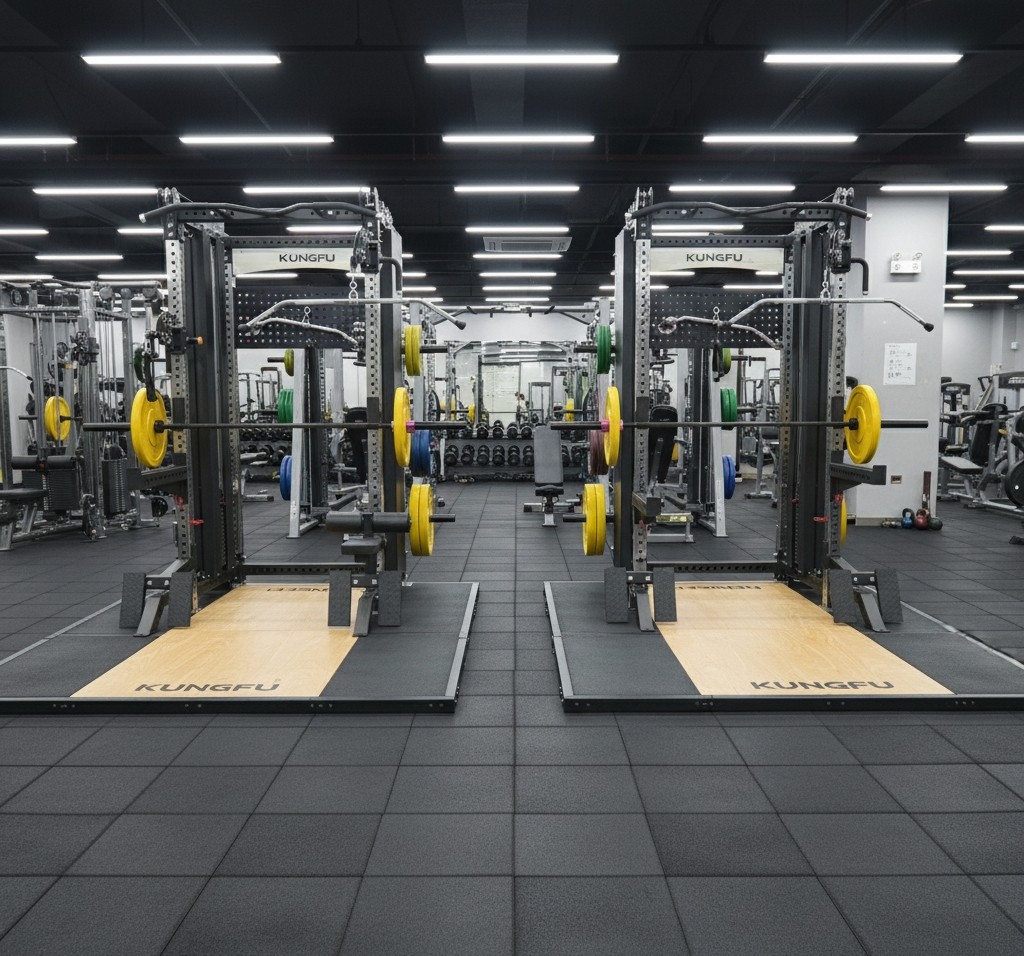
The Foundation Underfoot: The Right Flooring Solution
The Integrated Platforms. For facilities focused on heavy lifting or Olympic weightlifting, an integrated platform within each pod is the premier choice. A wood center provides a hard, stable surface for pulling, while the surrounding rubber drop zones protect the bar, the plates, and the building's subfloor.
The Workhorse: High-Density Rubber. For most general-purpose gyms, high-density rubber flooring (at least 3/4 inch thick) throughout the entire strength area is a durable, versatile, and cost-effective solution. It absorbs impact, dampens noise, and provides excellent grip.
The Investment Argument: The right flooring is a long-term investment. It prevents costly damage to the subfloor and drastically reduces wear and tear on expensive barbells and plates.
The squat rack is far more than a place to do squats. It is the foundational, strategic centerpiece around which an entire modern strength area should be built.
Let's work together to provide your clients with the intelligent, durable, and highly effective strength area solutions
Contact us today to start planning your next project and receive a quote for our complete line of commercial strength equipment.
Frequently Asked Questions (FAQ)
Q1: Is integrated plate storage on a rack really worth the additional cost?
Absolutely, 100%. The immediate improvement in gym safety, organization, and workout efficiency provides a return on investment from day one. It is arguably the single most important feature for a high-volume strength area.
Q2: What is the single biggest layout mistake that gym owners make?
The most common mistake is not leaving enough space between the racks. They underestimate the "working halo" required for a 7-foot barbell and for safe movement. This creates a cramped, dangerous environment that limits the gym's true capacity.
Q3: Is a hybrid rack with integrated cables a compromise compared to two separate machines?
Not with a high-quality squat rack. Modern hybrid racks use the same heavy-duty components, cables, and smooth pulley systems as standalone machines. There is no compromise on function, but there is a massive advantage in space savings.